
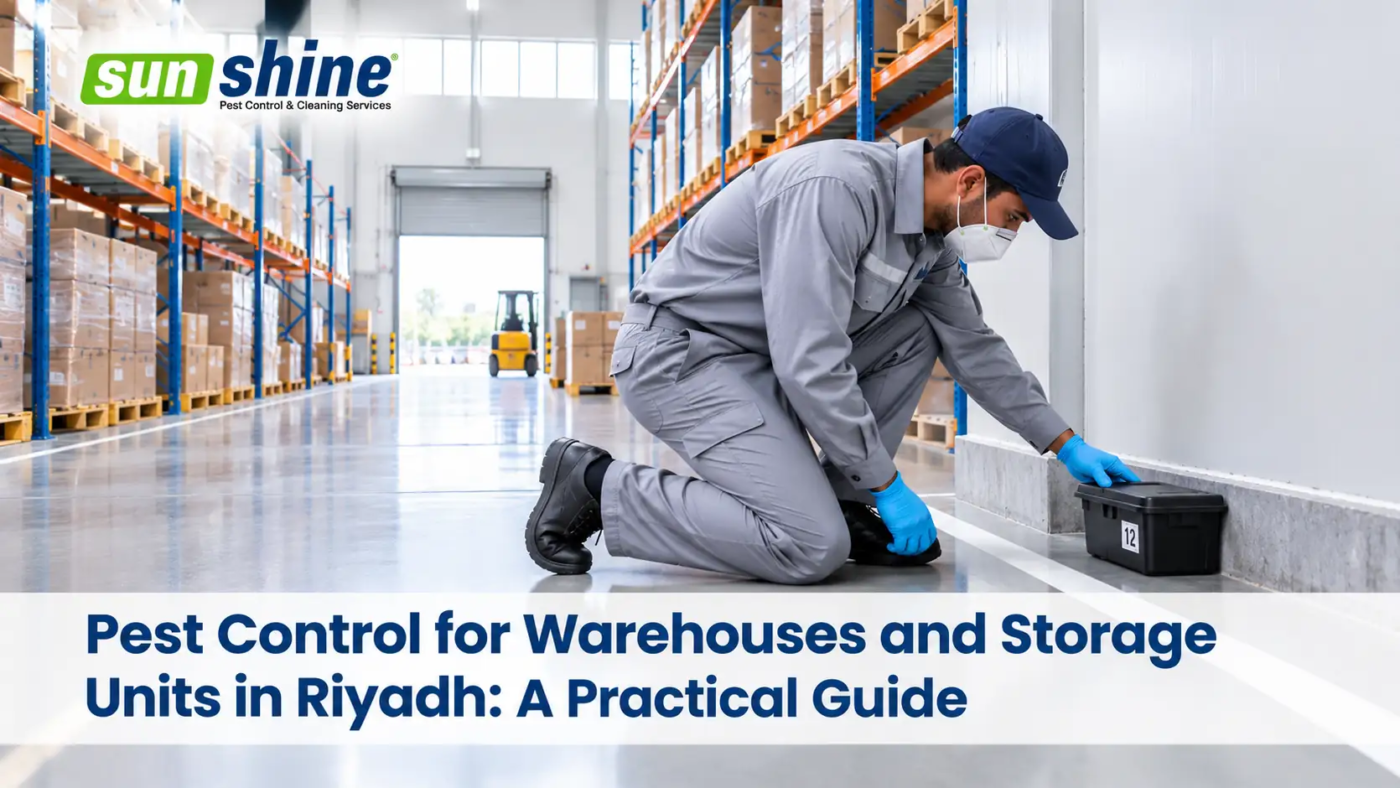
A warehouse looks like the safest place for your stock. It has strong walls, a roof, and a locked gate. But to a rat, a beetle, or a cockroach, it looks like a hotel with free food, shade, and plenty of places to hide.
Pests do not need much. A torn sack, a stack of cardboard, and a small gap under a roller door are enough to start a problem. Left alone, it damages stock, fails inspections, and costs real money.
This guide explains which pests target storage spaces, how they get in, which mistakes let them stay, and how commercial pest control Riyadh businesses depend on actually works.
Why Warehouses and Storage Units Attract Pests
Storage spaces share a few features that pests love.
- Steady supply. Food products, paper, glue, fabric, and packaging are all food or nesting material.
- Quiet corners. Pallets can stay untouched for weeks, so pests are rarely disturbed.
- Shade and cooler air. During the hot Riyadh summer, insects and rodents look for shaded, cooler places, and a warehouse offers exactly that.
- Constant deliveries. Trucks, containers, and pallets bring in new goods, and pests often travel inside them.
- Wide openings. Roller doors and loading bays stay open for hours every day.
Units inside shared storage complexes face an extra risk. If a neighbouring unit holds infested goods, pests can move through shared walls, roof gaps, and drains into your space.
Common Pests in Riyadh Storage Facilities
Rats and mice
Rodents are the biggest threat. They chew through sacks, cartons, cables, and insulation. Mice can pass through a gap about the width of a pencil, and rats can squeeze through a hole not much wider than a thumb. Their droppings and urine contaminate stock, and chewed wires raise the risk of electrical faults.
Cockroaches
Cockroaches hide in cardboard, pallet gaps, dock drains, and staff rest areas. They spread bacteria across packaging and food stock, and a small group can grow into a large one within weeks.
Stored product insects
Weevils, flour beetles, and pantry moths often arrive inside the goods themselves. They target rice, flour, spices, pet food, dried fruit, and dates. You may not notice them until the product is already spoiled.
Birds
Pigeons nest on rooftops, beams, and loading docks. Their droppings make surfaces dirty and slippery, can carry germs, and attract mites.
Ants and termites
Ants follow food residue and spilled sugar. Termites attack wooden pallets, crates, shelves, and stored paper, often from the inside, so the damage stays hidden for a long time.
Signs Your Warehouse Has a Pest Problem
Do not wait for a live rat to run past a forklift. Watch for these early signs:
- Gnaw marks on cartons, sacks, and wooden pallets
- Rodent droppings along walls, or small black specks from cockroaches
- Greasy rub marks along walls and pipes
- Torn packaging with spilled grain or powder
- Fine webbing or tiny holes in sacks, which point to moths and beetles
- A musty or ammonia-like smell in closed areas
- Scratching sounds in the ceiling at night
- Live insects seen during the day, which often means a crowded nest
- Customer complaints or returned goods
Common Mistakes That Let Pests Settle In
Most warehouse infestations grow because of a few repeated habits.
- Relying on one-off spraying. A single treatment does not stop pests from entering again.
- Skipping checks on incoming goods. Many infestations arrive on the delivery truck.
- Stacking stock against walls. This hides rodent activity and gives pests cover.
- Leaving doors open. A roller door left up for convenience is an open invitation.
- Ignoring the outside area. Weeds, rubbish, and standing water near the building feed the problem inside.
- Keeping waste indoors. Overflowing bins near the dock attract flies, roaches, and rats.
- Keeping no records. Without a log of sightings, patterns go unnoticed until damage appears.
- Acting only after damage. By the time you see chewed stock, the colony is usually well established.
Expert Tips to Protect Your Stock
A strong prevention routine does most of the work. Here is a simple plan you can start this week.
- Inspect every delivery before it enters. Look for holes, droppings, live insects, damp, and damaged packaging. Isolate suspect goods instead of mixing them with clean stock.
- Keep stock off the floor. Use pallets or racks, and leave a gap of about half a metre from the walls. Paint a white line along the wall so everyone can see the inspection lane.
- Use first in, first out. Older stock that sits for months gives stored product insects time to multiply.
- Seal the building. Fit door sweeps and rubber seals on roller doors, put mesh over vents, and fill holes around pipes and cables.
- Control waste. Use closed bins, empty them daily, and keep skips away from the building.
- Check your lighting. Bright lights right at the dock door attract flying insects at night. Move them away from entrances where you can.
- Fix water problems. Repair leaks, clear blocked drains, and remove standing water around the site.
- Set up monitoring. Place rodent stations along the outside perimeter, and use sticky and pheromone traps inside. Check them weekly and write down what you find.
- Train your staff. Loaders, drivers, and cleaners see the building most. Ask them to report any sign of pests straight away.
Why Regular Cleaning Matters
Pests follow food. Spilled grain, dust, broken packaging, and crumbs in staff areas feed them every day. Sweeping is not enough in a large facility. Racks, floor edges, drains, and loading docks need scheduled deep cleaning. Many facility managers book the best cleaning company in Riyadh to handle this alongside their pest program, so the two efforts support each other.
How a Professional Warehouse Pest Program Works
Spraying monthly and hoping for the best does not protect a large site. That is why serious commercial pest control Riyadh programs follow integrated pest management. This means prevention first, monitoring second, and treatment only where it is needed. A good program usually includes:
- Site survey. The technician maps entry points, high-risk zones such as food areas, docks, and waste points, and any structural gaps.
- Exclusion advice. You receive a clear list of repairs that stop pests from getting in.
- Rodent stations. Tamper-resistant stations are placed outside and inside, numbered, and mapped so each one is checked.
- Insect monitoring. Sticky traps and pheromone traps show which insects are present and where.
- Targeted treatment. Gel baits, crack and crevice applications, and residual treatments are used in the right zones, with food and packaging protected.
- Bird control. Netting, spikes, and proofing keep pigeons away from beams and docks.
- Written reports. Each visit ends with findings, trends, and recommendations that you can show to auditors and clients.
- Scheduled follow-ups. Regular visits catch small problems before they grow.
Not every provider offers this level of detail. Look for a licensed pest control company Riyadh businesses can verify, one that explains its products, understands food storage rules, and gives you proper reports instead of a verbal “all done”.
What to Ask Before You Hire Anyone
A short list of questions will quickly show who knows warehouses.
- Are your technicians licensed and trained for food storage sites?
- Which products do you use near packaged and open food?
- Will I get a written report and a site map after each visit?
- How fast can you respond to an urgent problem?
- Have you worked with warehouses, logistics centres, or food distributors before?
Rodents are the most common emergency in storage sites. If you already have signs of gnawing or droppings, a specialist rodent control company in Riyadh can trace the entry points and set up a proper station system. For a wider view of what a complete plan covers, you can also review the available pest control services in Riyadh before you decide.
Benefits of a Proper Pest Program for Warehouses
Good pest control is not just a cost. It protects the business in several ways.
- Protects stock and profit. Fewer damaged sacks, cartons, and returned orders.
- Helps you pass inspections. Clean records and written reports make audits easier.
- Protects your reputation. Clients trust suppliers who deliver clean, uncontaminated goods.
- Prevents equipment damage. Rodents that chew cables and insulation can cause costly faults.
- Keeps staff safe. Fewer contaminated surfaces and fewer pest-related health risks.
- Lowers long-term cost. Early action is far cheaper than clearing stock and treating a heavy infestation.
Final Thoughts
Warehouses and storage units give pests everything they want: food, shelter, and quiet. The good news is that most problems can be stopped early with simple habits. Inspect deliveries, seal gaps, keep stock off the walls, control waste, and keep records.
When the site is large or the stock is valuable, bring in professionals. A planned commercial pest control Riyadh program turns pest management from a constant emergency into a routine that protects your goods, your clients, and your brand.
Frequently Asked Questions
Most warehouses do well with a scheduled visit every month, and food storage sites often need visits every two weeks. The right schedule depends on stock type, building size, and past pest activity. Regular monitoring between visits matters just as much as the treatment itself.
Yes, when it is done by trained technicians. Treatments near food use targeted methods such as bait stations, traps, and crack and crevice applications instead of open spraying. Ask your provider which products they use and how they protect stock during treatment.
Inspect every delivery before it enters the main storage area. Look for holes, droppings, webbing, damp, and damaged packaging. Keep suspect goods in a separate area until they are checked, and avoid stacking cardboard against walls.
Yes. Even a small unit can be infested if it holds food, paper, fabric, or cardboard. Pests can also move in from neighbouring units through shared walls and gaps. Sealing the unit, keeping items off the floor, and storing goods in sealed plastic boxes helps a lot.
Do not sweep them dry, as this can spread dust and germs. Wear gloves and a mask, clean the area with disinfectant, and isolate any touched stock. Then call a professional to find the entry points and set up a proper station system, because droppings usually mean rodents are already living nearby.